Video games are a powerful medium for commentary and sharing experiences that may be more difficult to communicate through a singular method. Video games often combine visual with narrative, but where they shine is in allowing (forcing?) the “player,” or potentially the “audience”, to interact to proceed. Interaction implies choice, or at least the illusion of it. When experiencing a video game, there is an expectation for the possibility of agency. However, games like You Gotta Get Off The Train and You Have to Burn The Rope both subvert this possibility. (Links to each game at the bottom).
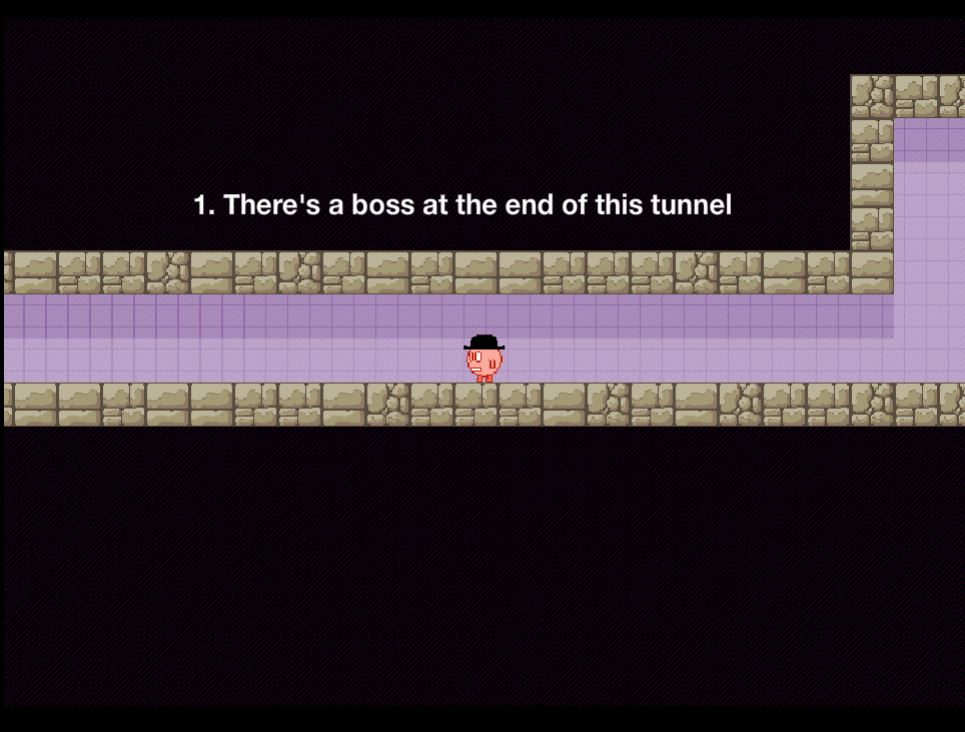
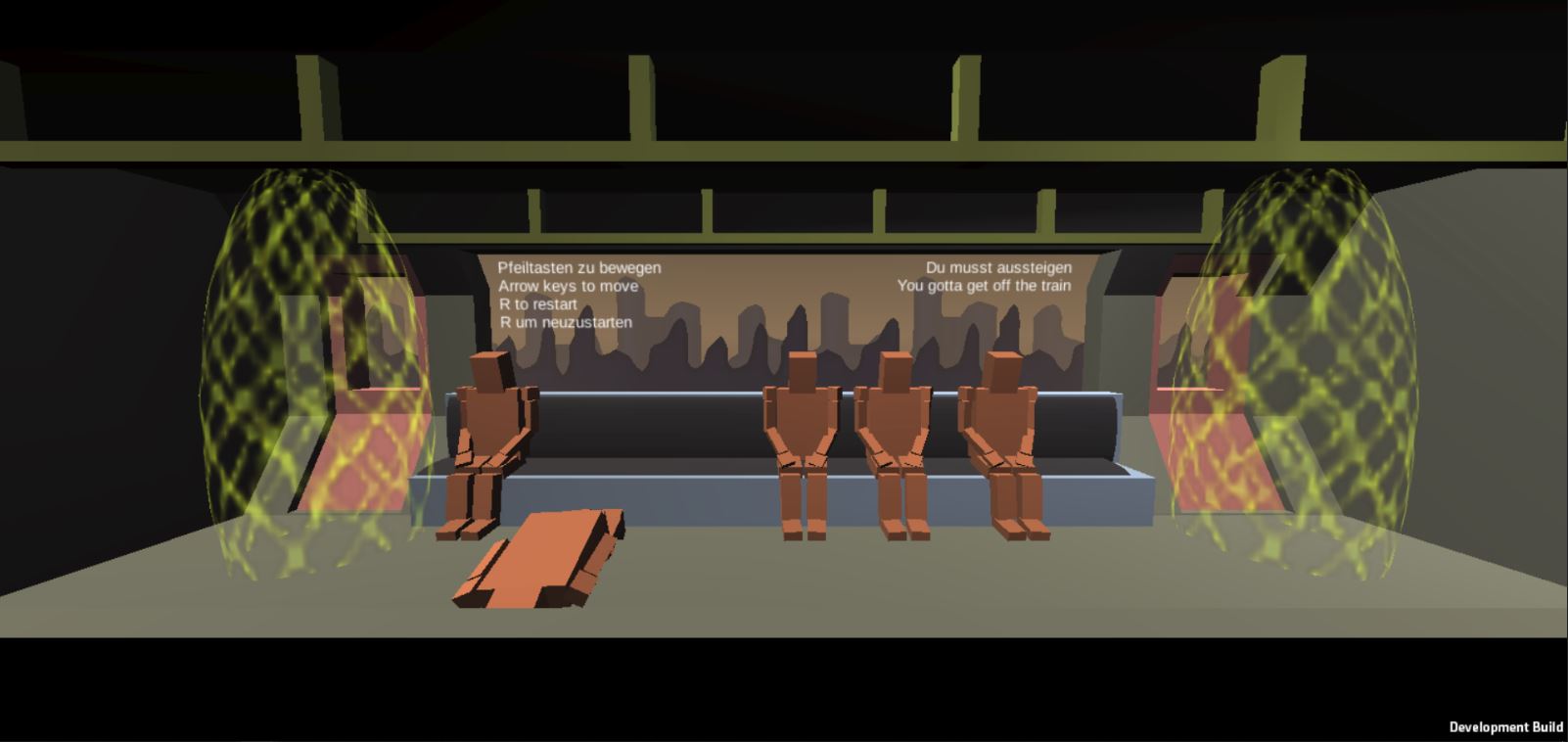
In You Have to Burn The Rope, the player can control the avatar and move through the “level,” but calling it a level is an exaggeration. The player is heavily guided through the hallway with blatant signs that inform every detail of the level, including what and how to defeat the final boss. This hand-holding is a commentary on dumbed-down games that allow for lazy level design while preventing the player from inferring and figuring out their own paths through experience. Underestimating the player trains them to be complacent in their experience and it is detrimental for the overall enjoyment of the game. Much like in You Have to Burn The Rope, You Gotta Off The Train provides an atypical “gaming” experience. The player is presented with a monotone, dream-like scene that is reminiscent of a surreal nightmare, and must figure out how to get off the train by ragdolling into one of the yellow portals on either end of the cabin. As I stated in my Game Lab post, You Gotta Get Off The Train is an uncomfortable train ride, as the “lack of autonomy/direct translation of character movement vs player input felt like wearing a too-tight shoe in which one’s toes are sweaty, immobile, and very claustrophobic.” Opening the game and starting off with a caps-locked and squished “LADENLOADINGLADENLOADING” loading text was already disorienting enough as the screen proceeds to drop the player into a silent cabin of immobile and faceless mannequins. Unlike in You Have to Burn The Rope, there is most assuredly no excessive hand-holding in this game. Though the control keys are displayed on the window, the player must figure out how to move, and while the objective seems simple, it is quickly apparent that it is anything but. There is only one level, and the player beats the game if they succeed in flailing their way out of the train. (While being given the option to restart the grueling experience with the press of a button).

Watching my partner play the game was amusing but frustrating, as the game becomes: “I Gotta See You Get Off The Train.” Without initially experiencing the game before my partner, it was not immediately clear that the game’s movement mechanisms are akin to QWOP’s chaotic spasms. Simultaneously being unable to assist while only being able to observe without becoming a back-seat gamer provides another level of stress in the lack of agency.
These types of “games” allow players to question the definition of what a game is. Without using the formal “tutorial” like text in You Have to Burn The Rope, You Gotta Get Off The Train and the “dating simulator” game Cum High use an unorthodox or “casual” presentation of instructions and narrative text. Cum High is vulgar and blatantly non-sequitur, and I question whether or not to even call it a “dating sim”. However, this quality is similar to the other two games in its randomness. Cum High seems like a joke, but it can serve as a satirical parody of the dating simulator genre. (though that in itself may be a reach for meaning, as the creator was apparently drunk when he created the game.)

A game easily suffers when the player is fully guided through the experience. The ability to choose and explore options should be intentionally designed towards, as it provides a game with more potential for depth. You Have to Burn The Rope criticises games that simply provide a dumbed down video game version of a “get to the end” “roll/spin move” experience without even having to roll or spin to move. You Gotta Get Off The Train is a potential example of an interesting experience that requires little guidance, and Cum High, though completely scripted as a result of its genre, still provides an interesting and non-traditional use of the usual medium.


You can play the games for yourself here:
 Level 1